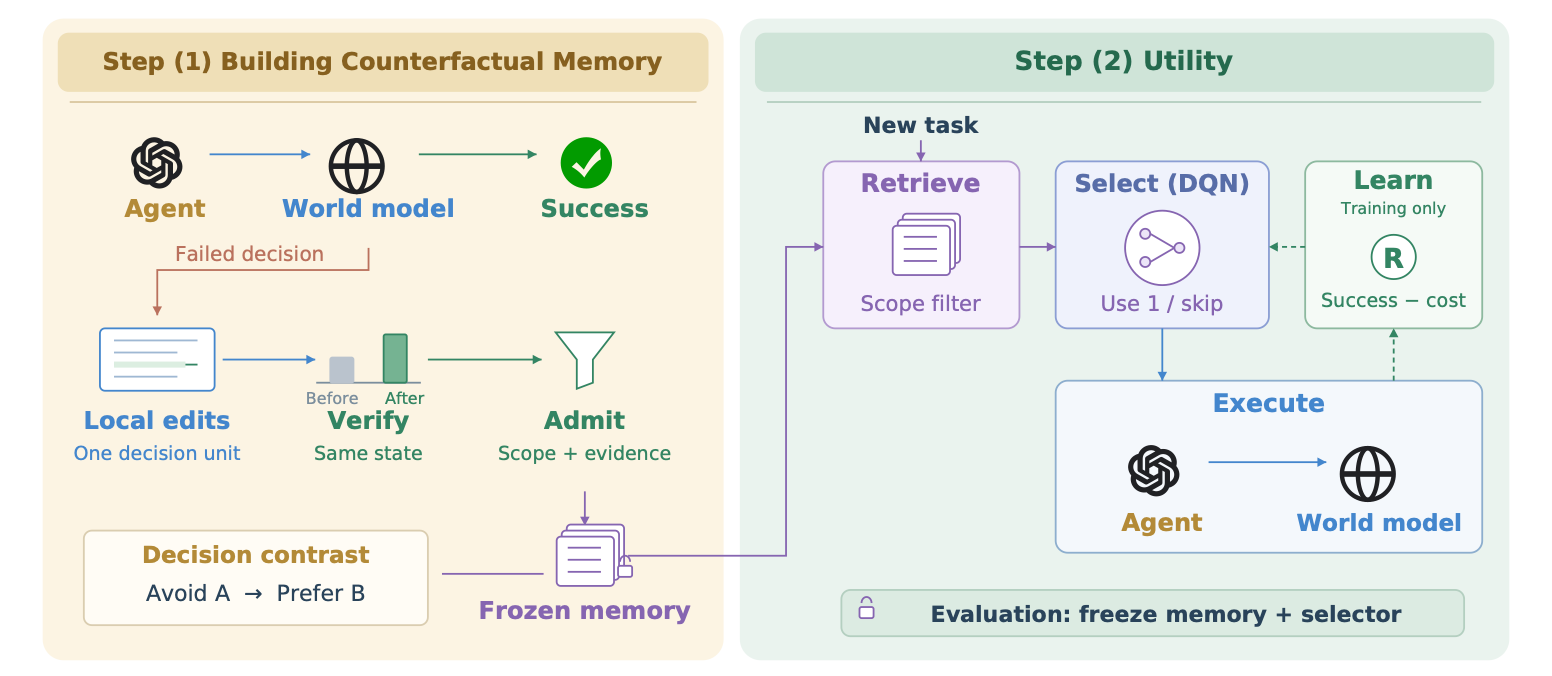
What if the agent had acted differently — can that become memory?
CounterMem keeps only alternatives verified by executable world models — improving ReAct and Reflexion on all 12 benchmarks, +12.6 points.
Designing language agents that do more than predict — they remember, verify, and evolve from experience.
CounterMem keeps only alternatives verified by executable world models — improving ReAct and Reflexion on all 12 benchmarks, +12.6 points.
01 — Profile
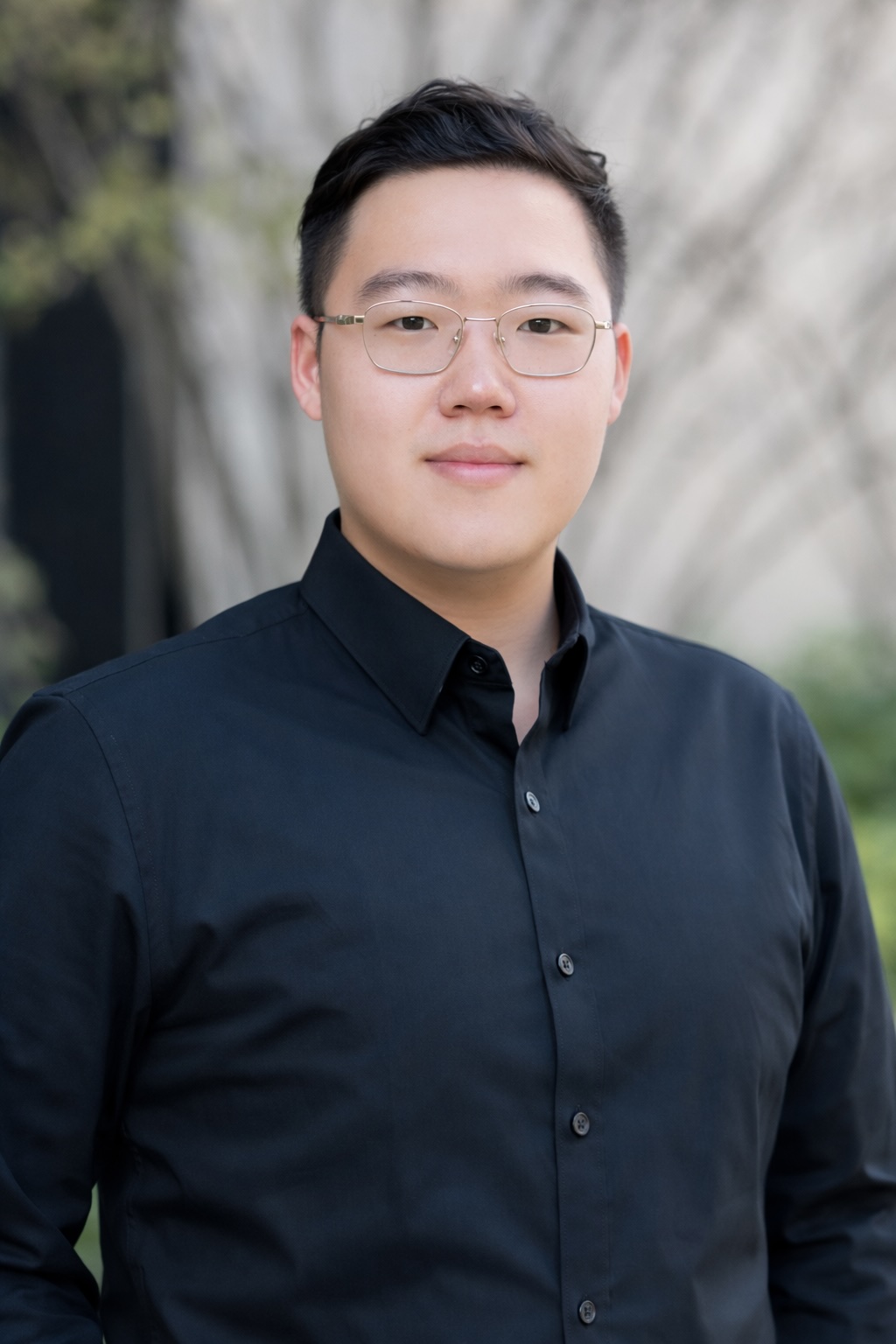
Here is Hongji Pu (JP, 蒲洪基).
An AI systems researcher driven by a fundamental curiosity: how can complex systems make better decisions under uncertainty?
My intellectual journey began with financial systems, where I studied how mathematical models capture uncertainty, quantify risk, and support decision-making in dynamic environments. Through this lens, I became fascinated by a broader question: as decision-making systems evolve, could they move beyond prediction and optimization to perceive, reason, learn, and continuously adapt?
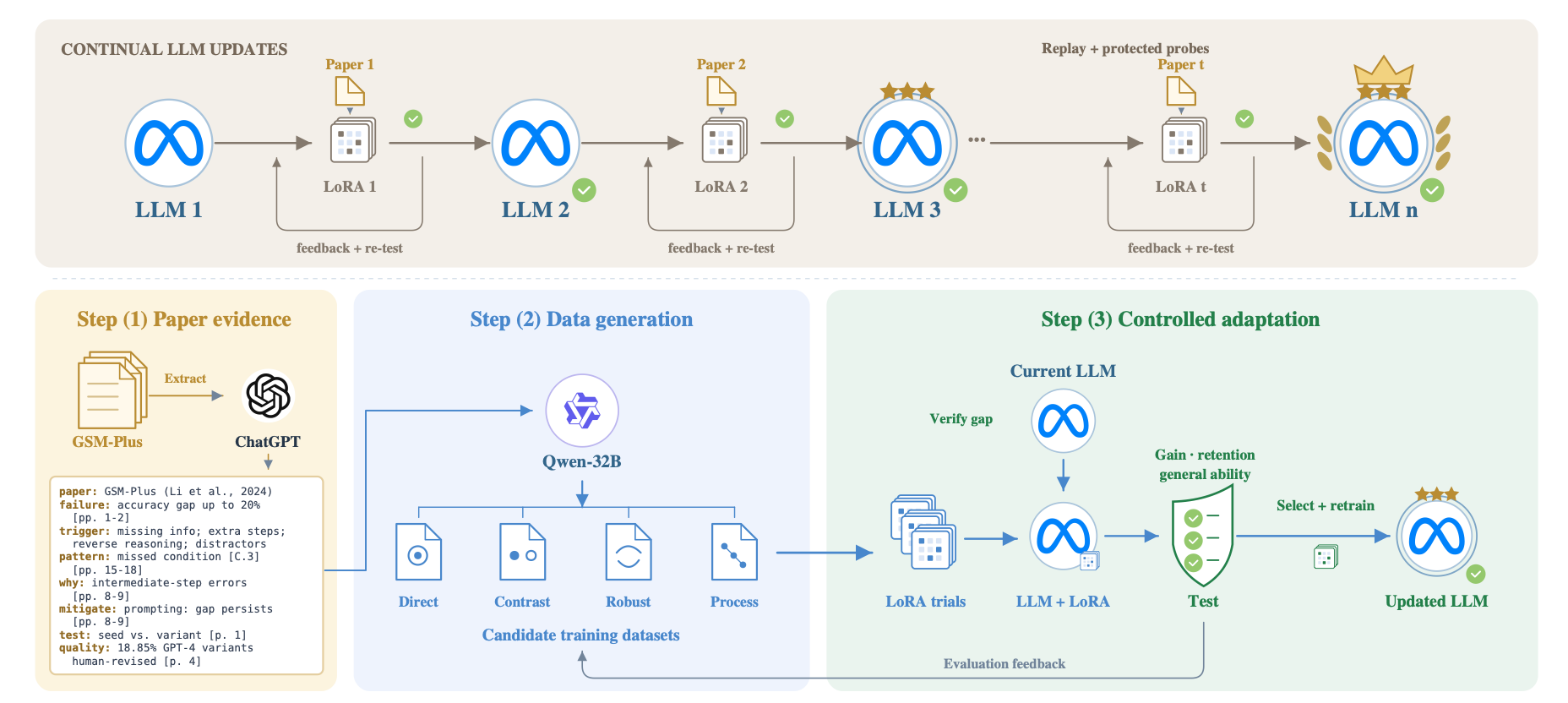
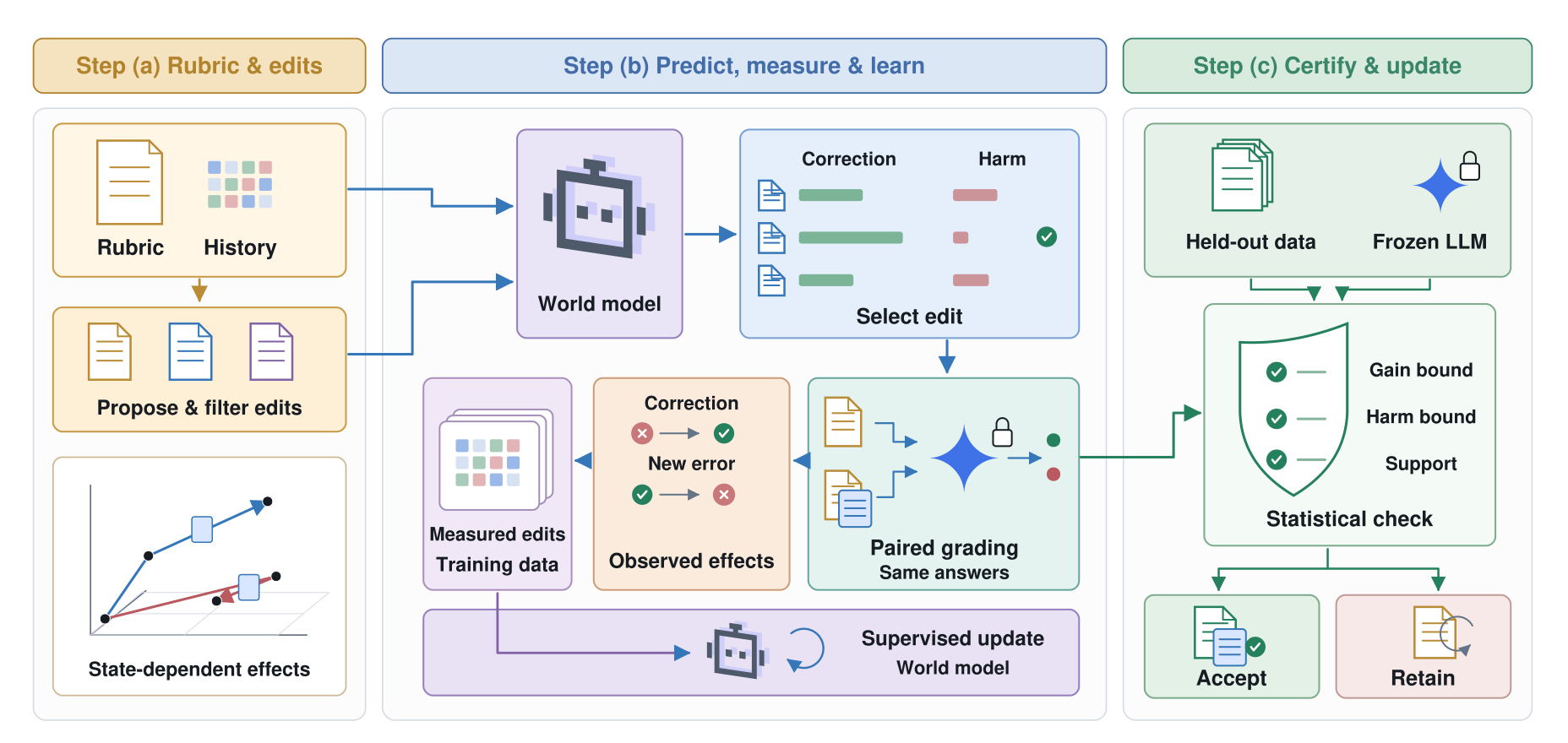
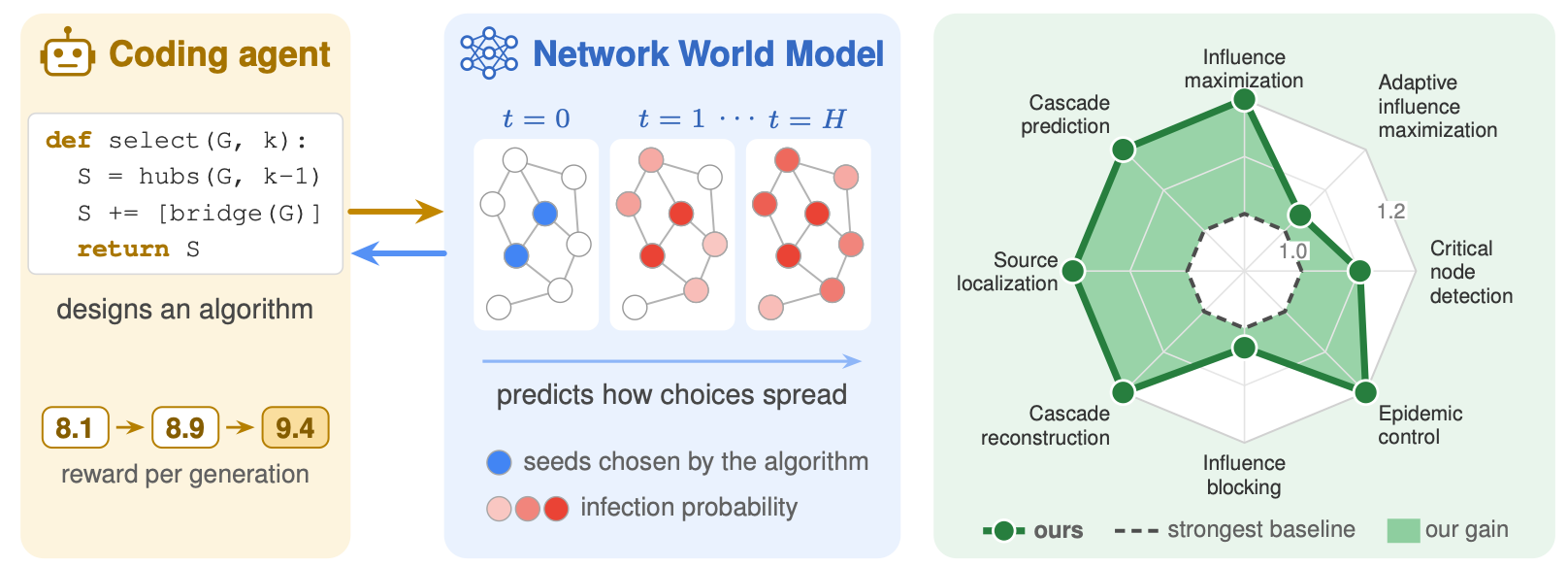
My research focuses on language agents, continual learning and self-improvement, and world models for evaluation and decision-making. I study how language models and agents use memory and external evidence, learn from research findings and feedback, and acquire new capabilities while retaining what they have learned. I develop methods to verify proposed updates and determine when past experience remains useful as a system changes. I also investigate how world models guide rubric optimization for automated grading and algorithm design on complex networks. Across these directions, I ask when improvements in a model translate into better decisions.
02 — Education
03 — Focus
One builds the machinery of trustworthy agents. The other puts that machinery to work where the stakes are real.
Putting agents to work in domains where being wrong is expensive.
The machinery underneath: verification, self-evolution, world models, and infrastructure.
The wise man doesn't give the right answers, he poses the right questions.
Claude Lévi-Strauss